
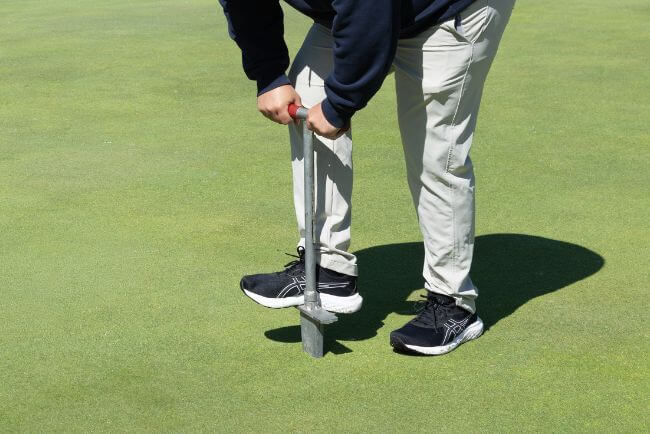
Late summer is an important time to evaluate fertility needs and prepare turf for recovery from heat, drought, traffic, disease pressure, and inconsistent moisture. Although turf may begin to improve as temperatures moderate, recovery does not happen automatically. The plant still needs the right nutrients, applied at the right time, to rebuild roots, restore density, and prepare for fall and winter stress.
Planning fertility applications in advance makes it easier to respond to plant needs and weather conditions, rather than making last-minute decisions based on appearance alone.
Evaluate the Turf First
Start by determining whether stressed turf can recover or whether damaged areas will require overseeding or renovation. Inspect the crown for viable leaf tissue and look for healthy root hairs. Turf with living crowns and active roots may respond well to improved growing conditions and a targeted fertility program. Severely thinned or dead areas may require seed or sod.
A soil test can help identify nutrient deficiencies, pH concerns, and other conditions that may limit fertilizer performance. Tissue testing can also provide insight into what the plant is currently absorbing. Together, these results can help guide product selection and prevent unnecessary applications.
Review the areas most likely to need attention, including high-traffic greens, approaches, localized dry spots, compacted soils, shaded turf, and locations with recurring disease pressure. Identifying these areas early can help superintendents tailor fertility applications to each playing surface.
Support Recovery Without Excessive Nitrogen
Stressed turf, especially greens, needs more than a quick shot of nitrogen. During prolonged summer stress, cool-season turf may have limited roots and reduced carbohydrate reserves. As a result, applying too much nitrogen can force rapid top growth before the plant has the root system or energy needed to support it.
Use balanced fertility to encourage steady recovery without creating excessive clipping production, water demand, or disease susceptibility. Foliar applications can provide targeted nutrition while root activity remains limited.
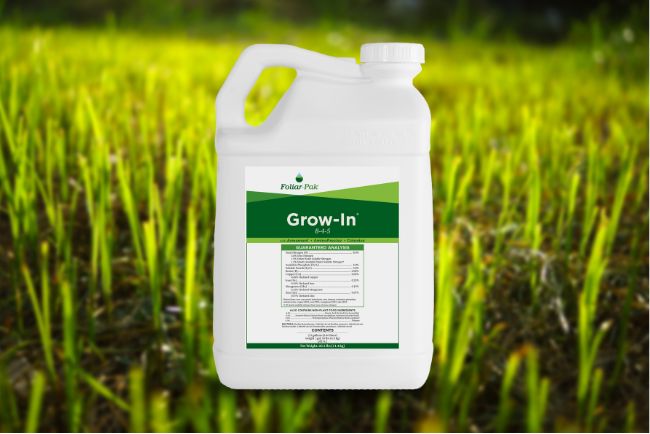
Foundation Forty supplies targeted amino acids that support plant function, water balance, and recovery without forcing excessive top growth. Grow-In provides foliar N-P-K nutrition, micronutrients, and biological components to support rooting and turf recovery without relying on a heavy nitrogen application. When conditions are appropriate, it can be followed with granular fertility.
Consider More Than Nitrogen
Nitrogen may drive visible growth, but phosphorus, potassium, and micronutrients also support important recovery processes.
Phosphorus supports new root development and establishment. When seeding damaged areas, choose a starter fertilizer that supplies appropriate phosphorus based on soil conditions and local regulations. Consider Armament P where phosphorus is needed, and tied-up nutrients may limit plant response.
Potassium supports water regulation, plant function, and stress tolerance. Use products such as Armament K to supply potassium while supporting nutrient availability in the root zone.
Micronutrients support chlorophyll production, photosynthesis, and other plant processes. Use products such as Micros Plus and Amperage to support color, energy production, and overall plant function during recovery.
Late summer is not the time to apply more fertilizer. Instead, determine what the turf is missing, what it can use, and what will help it recover efficiently. A planned fertility program can restore turf from summer stress while building stronger playing surfaces for fall, winter, and the following spring.

Related Posts


About the Author John Gruneisen

I am the Midwest territory sales manager for EnP, supporting the Foliar-Pak product line. I am a Columbus, Ohio native and I graduated from The Ohio State University with BS in Turfgrass Science and a minor in Plant Pathology. I spent nine years in the golf industry before getting into the vendor sector of the green industry eight years ago and focusing on carbon-based fertility. I am passionate about efficient and effective fertilizer. Send me an email if you’d like to connect.
Read More Posts from John