
When evaluating a liquid fertility product, it’s crucial to move beyond surface-level claims and dig into the finer details on the label. Customers can make informed decisions about a product’s composition, potential effectiveness, and value by focusing on six elements. Below, we break down these six key elements to help you better interpret liquid fertilizer labels and make smarter choices.
Fertilizer Analysis: The Role of N-P-K
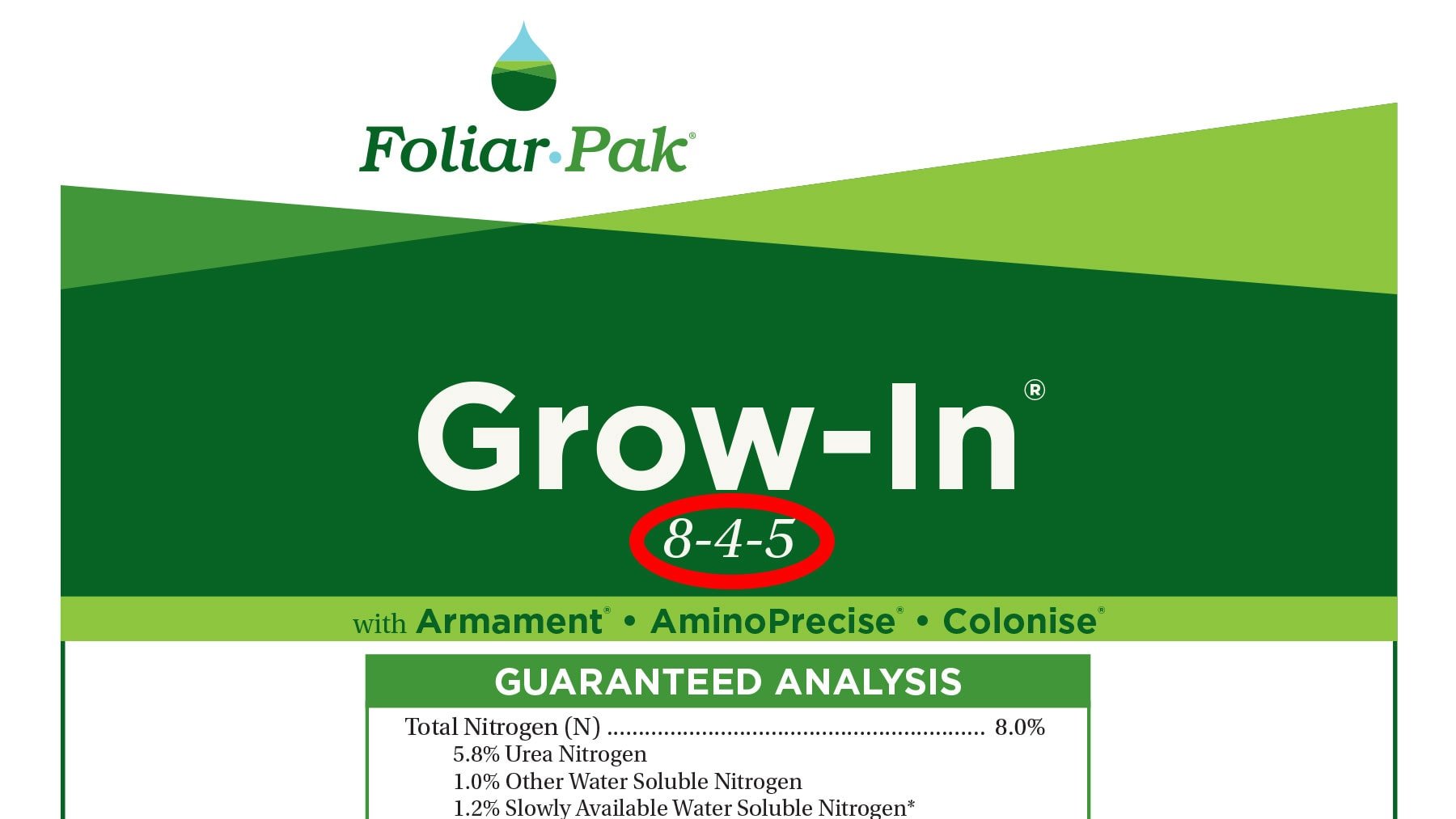
The fertilizer analysis on a liquid fertilizer label appears as a sequence of three numbers—such as 4-0-2 or 8-4-5—and represents the percentage by weight of key macronutrients essential to turfgrass health. This is commonly referred to as the N-P-K ratio:
- Nitrogen (N) – Drives shoot growth as well as helping create vibrant color and turf density.
- Phosphorus (P) – Supports root development and early establishment, especially critical for seedlings or newly sodded turf.
- Potassium (K) – Enhances wear tolerance, drought resistance, and overall turf hardiness.
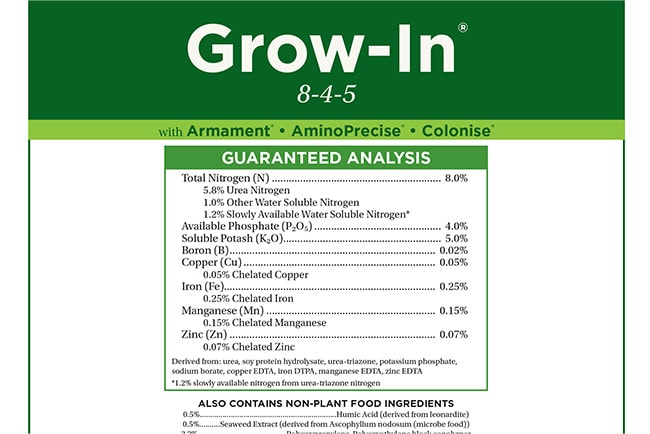
For example, a product labeled 8-4-5, like Foliar-Pak Grow-In, contains:
- 8% Nitrogen
- 4% Phosphorus
- 5% Potassium
This ratio directly reflects the nutrient balance you are applying to your turf.
Guaranteed Analysis: The Nutrient Breakdown
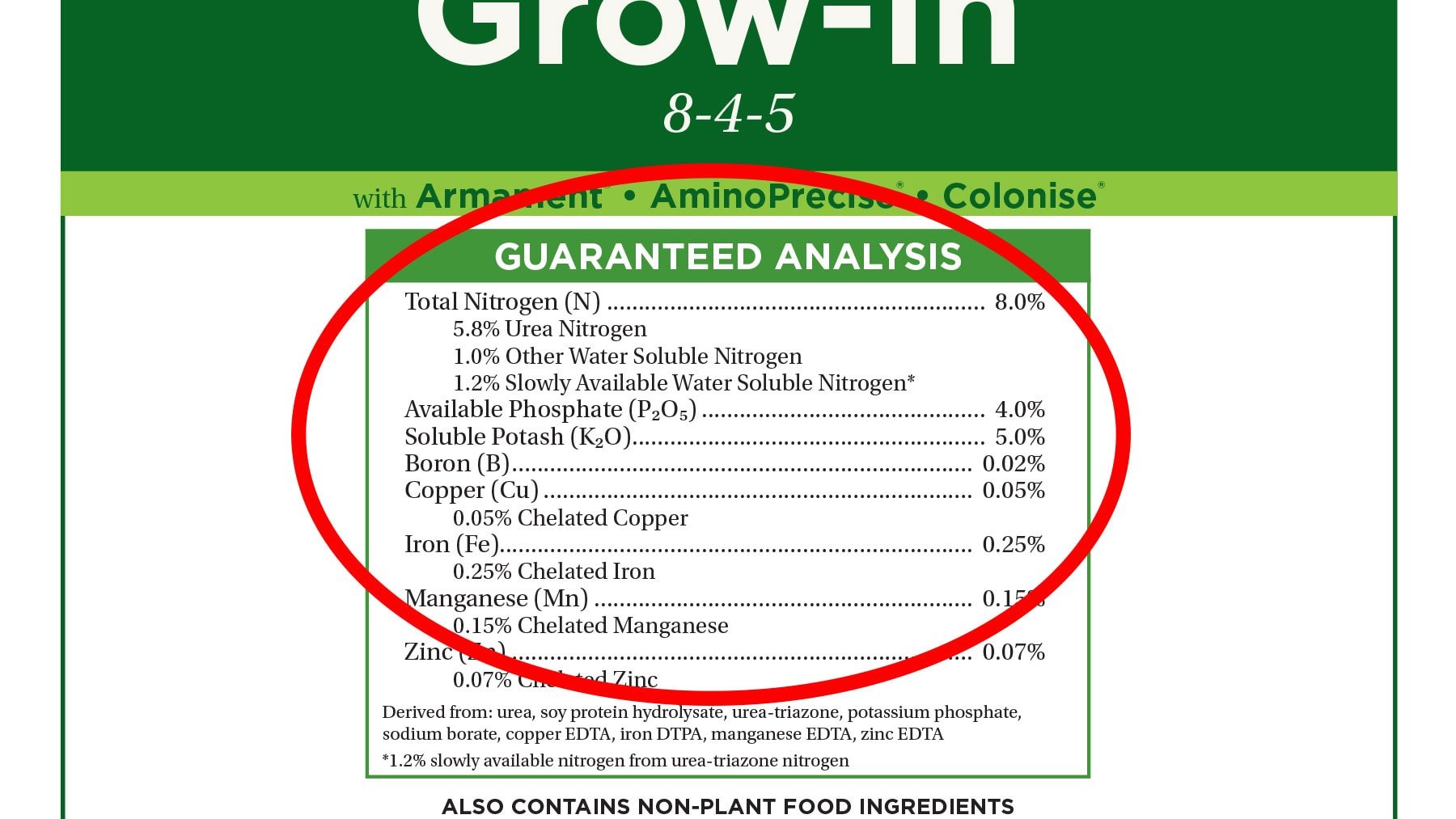
The “Guaranteed Analysis” is a legal requirement on a liquid fertilizer label that provides a detailed breakdown of the concentrations of nutrients contained in the product, often portrayed as percentages. It is usually displayed as a table or list and expands upon the fundamental N-P-K analysis by including primary nutrients and any secondary or micronutrients the product contains.
Each entry specifies:
- The type of nutrient (e.g., Total Nitrogen or Soluble Potash)
- The percentage by weight
- The source of the nutrient (optional but often included)
The “Guaranteed Analysis” is your starting point for understanding what nutrients are present and in what amounts. For example, if a product lists 7% nitrogen, it means that out of 100 pounds of the product, 7 pounds are pure nitrogen.
Derived From: Understanding the Source Material
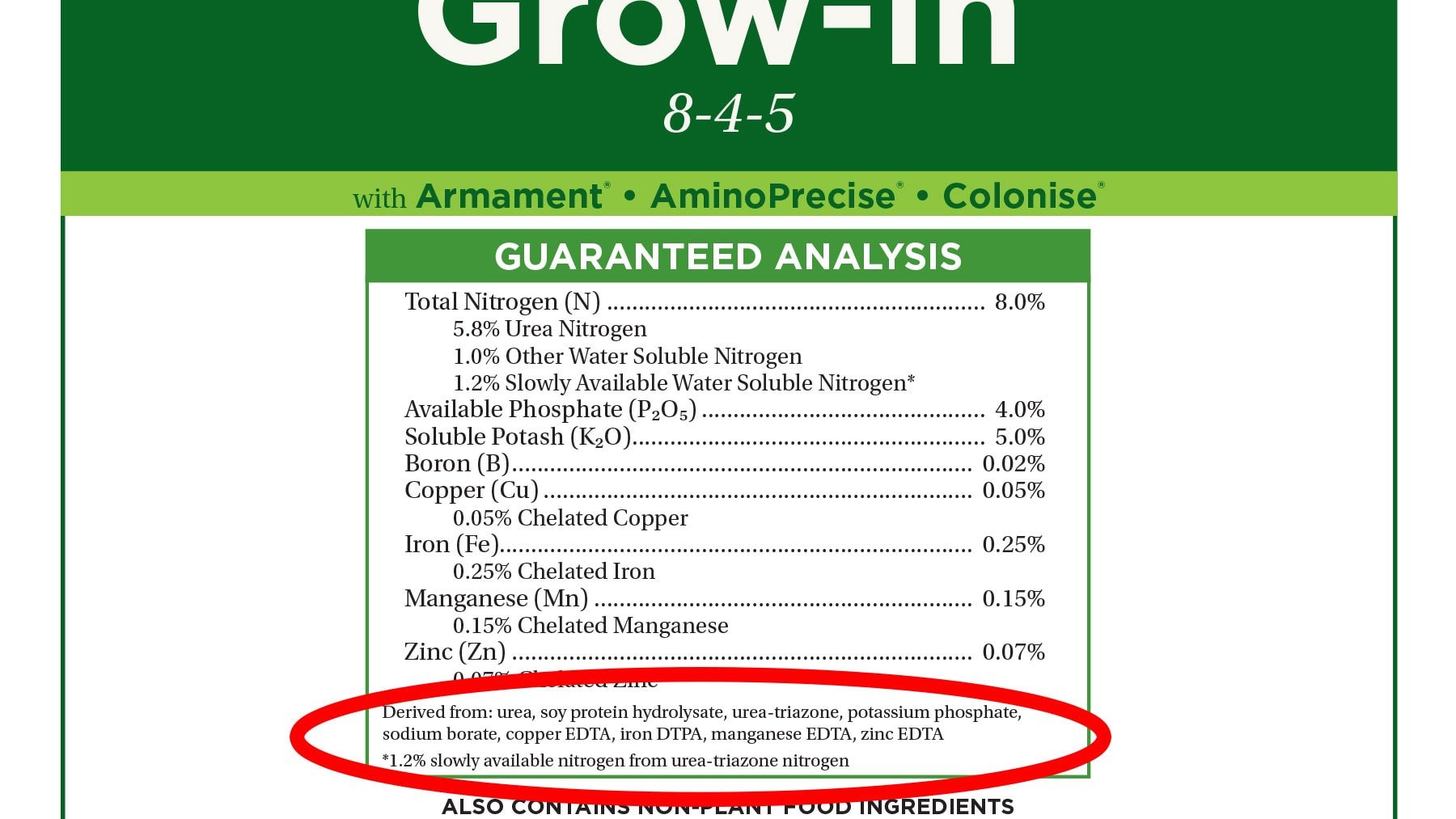
The “Derived from” section explains the chemical or natural sources behind the nutrients listed in the “Guaranteed Analysis.” For instance, potassium acetate is a more plant-available and less phytotoxic potassium source than potassium chloride. This section answers the critical question: Where do these nutrients come from?
Understanding these sources helps users make smarter decisions. Different materials release nutrients at different rates—urea provides quick-release nitrogen, while methylene urea offers a slow, steady feed. Chelated micronutrients stay available under a broader range of pH conditions, making them more effective in varying soils.
This information is key for ensuring compatibility in tank mixes, avoiding chemical reactions, and preventing equipment issues. It also supports safe and environmentally responsible use, as some ingredients may be restricted or require special handling.
Non-Plant Food Ingredients: Added Functional Benefits
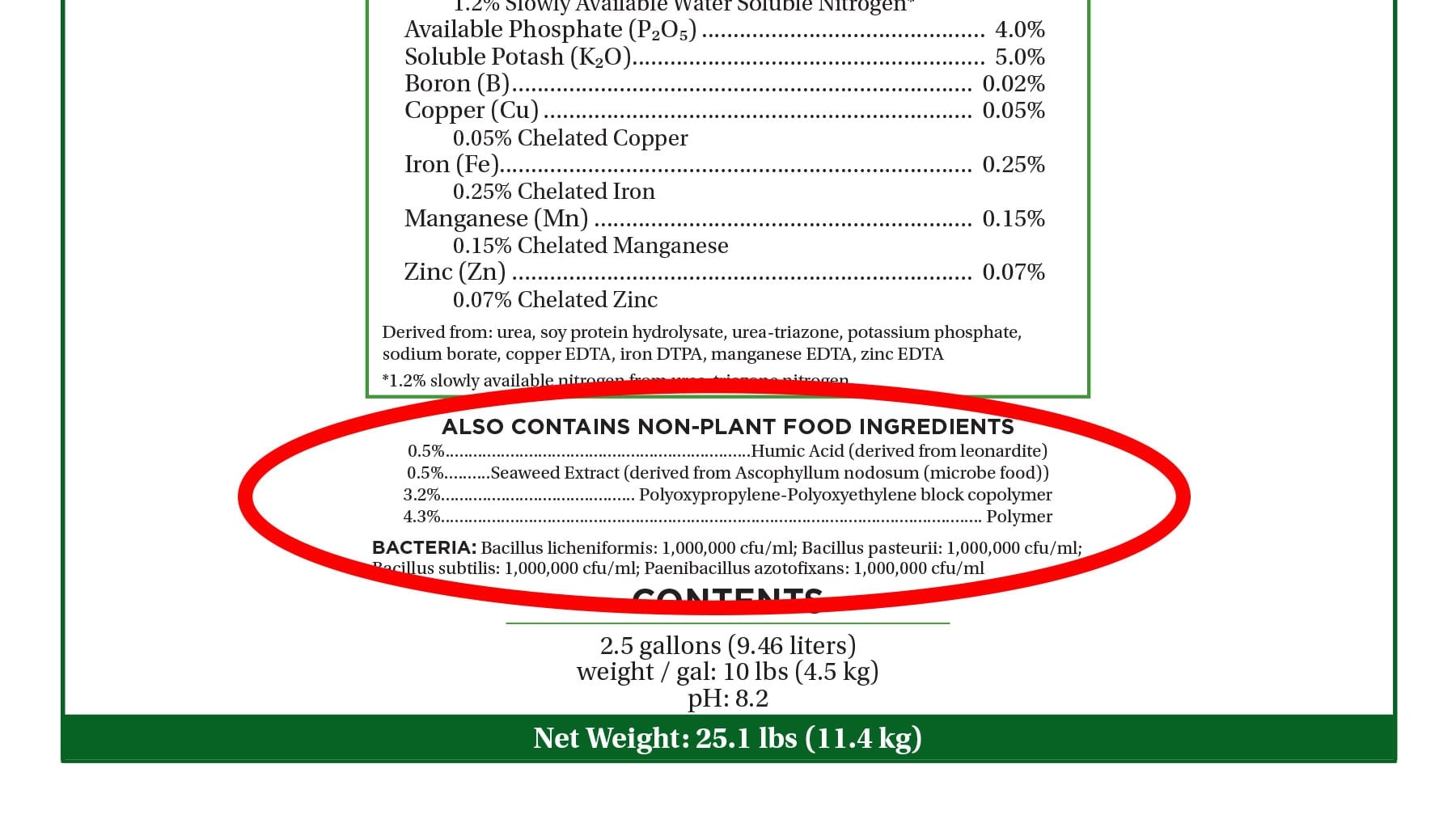
This often-overlooked section contains substances that, while not directly contributing to N-P-K values, play a crucial role in nutrient delivery and plant health. Look for ingredients such as:
- Amino acids
- Humic and fulvic acids
- Polymers like our Armament technology
- Carbon sources
- Vitamins
- Wetting agents
These ingredients also do not directly nourish turfgrass, but they enhance how the product works by improving nutrient absorption, protecting nutrients from tie-ups in the soil, improving tank mix compatibility, or helping plants better resist environmental stress.
Weight per Gallon: Assessing Product Density
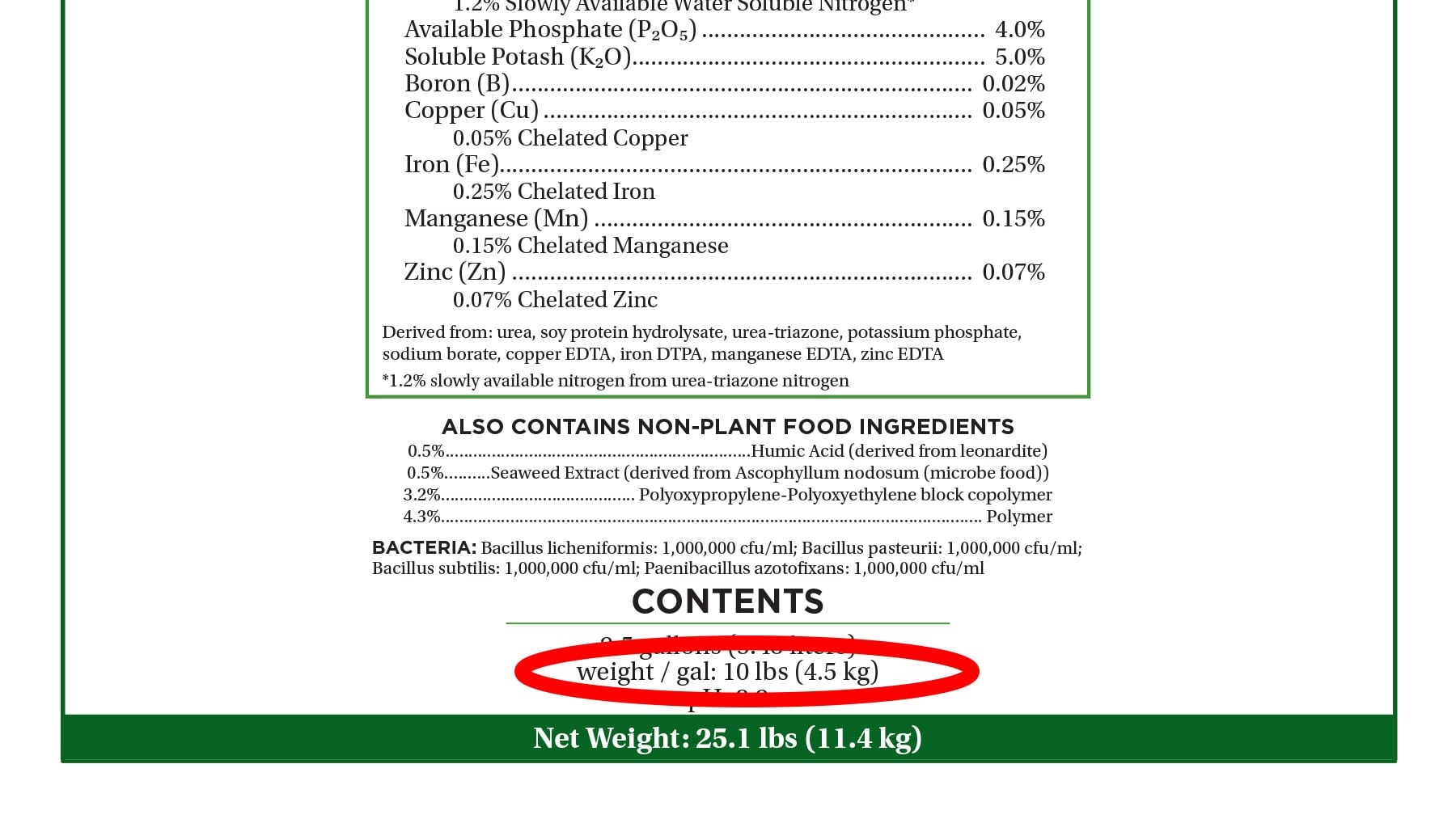 The section that contains the weight per gallon tells you the density of the liquid fertilizer, specifically, how many pounds one gallon of the product weighs. It also offers a window into the actual concentration of active ingredients versus water content. Pure water weighs 8.34 lbs per gallon. If a liquid fertility product weighs slightly more than that, it’s likely diluted and may contain fewer active ingredients.
For example, a product weighing 10.59 lbs per gallon suggests a robust formulation with over 2 lbs of additional materials beyond just water. In contrast, lower-weight products may rely on hidden ingredients like iron or growth hormones to generate a visible response without delivering substantial nutrition.
pH: Influencing Nutrient Availability and Compatibility
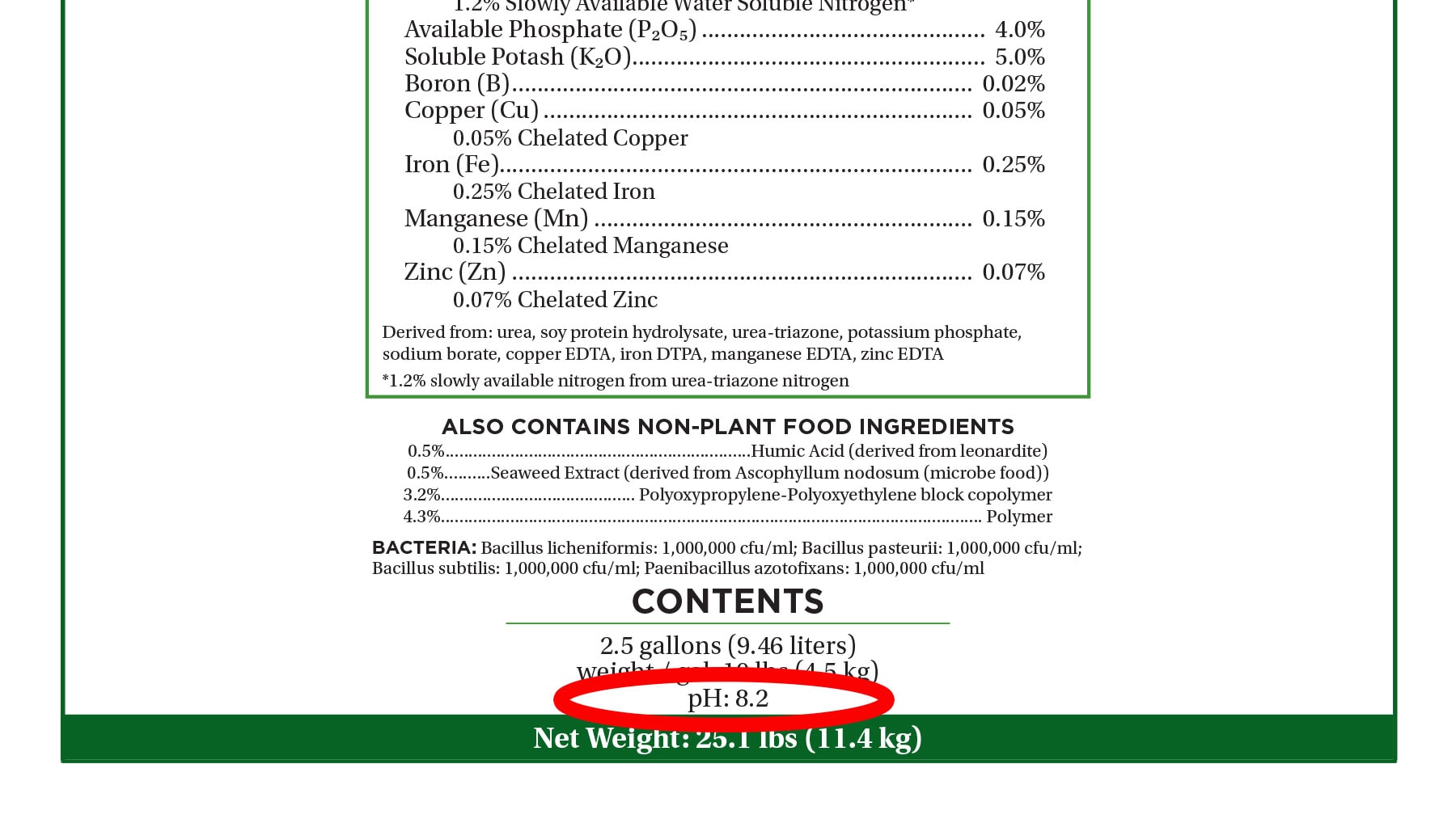
The “pH” section on a liquid fertilizer label indicates the acidity or alkalinity of the fertilizer solution. The product’s pH affects not only how nutrients interact in the tank but also their availability to the plant. A pH that is too high or too low can cause nutrients to precipitate or become unavailable, especially in complex tank mixes.
Maintaining a balanced pH—often around neutral or slightly acidic—helps ensure nutrients remain soluble and available. This is especially critical when using products with amino acid chelates or other complexed nutrients that depend on maintaining charge neutrality and solubility.
Master the Label, Maximize the Outcome
Liquid fertilizer labels may seem like a lot at first glance, but understanding those six key elements can transform how you assess and compare products. Focusing on these indicators gives you deeper insights into product quality, compatibility, and performance, ensuring better outcomes.
Whether you’re a lawn care operator, sports turf manager, or golf superintendent, mastering the label means maximizing your investment—and the plant’s potential.

Related Posts

Media Contact John Gruneisen

I am the Midwest territory sales manager for EnP, supporting the Foliar-Pak product line. I am a Columbus, Ohio native and I graduated from The Ohio State University with BS in Turfgrass Science and a minor in Plant Pathology. I spent nine years in the golf industry before getting into the vendor sector of the green industry eight years ago and focusing on carbon-based fertility. I am passionate about efficient and effective fertilizer. Send me an email if you’d like to connect.
Read More News Posts from John