
Efficient nutrient management ensures healthy plant growth. Nitrogen and potassium, two essential nutrients, can face challenges related to stability and availability in the soil. Foliar-Pak Armament, our leading soil carbon technology, addresses these challenges by enhancing nutrient uptake and reducing losses. Let’s explore how it impacts nitrogen and potassium use.
Soil Surface Protection: Reducing Nitrogen Losses
When a urea prill is applied to the soil surface and starts to break down, the free urea is under tremendous pressure from high concentrations of urease enzymes. High levels of these enzymes on the soil surface create an environment where urea converts to ammonia gas (NH3) and carbon dioxide. Unless the ammonia gas reacts with water to form ammonium, the ammonia will volatilize and be lost to the atmosphere. For growers, the nitrogen loss becomes a waste of money and resources. But the plant has lost an opportunity, too.
How does Armament keep ammonia from being lost to the atmosphere? Granular urea coated with Armament supplies a physical barrier, reducing the ammonia volatilization rate. Reducing ammonia volatilization minimizes nitrogen loss to the atmosphere and keeps more nitrogen in the soil.
In-Soil Stabilization: Enhancing Nitrogen + Potassium Availability
When urea converts to ammonium in the soil, the ammonium levels build up dramatically in the root rhizosphere, creating issues as the negatively charged soil colloids and mineral complexes in the immediate area where the urea prills were fill up. Once the negative sites fill up, two things may happen separately or simultaneously:
- Ammonium Movement: Ammonium may move deeper in the soil away from the concentration and possibly away from the growing area of plants’ roots.
- Potassium Displacement: Ammonium, due to its similar molecular radius to potassium, may displace potassium from soil colloids, leaving it unattached, prone to movement away from the roots, and at risk of becoming immobile as a mineral complex.
Armament prevents ammonium movement and potassium displacement by slowing the rate of urea conversion to ammonium, increasing the cation exchange capacity’s effect in the upper root zone, and allowing more potassium and ammonium to be held in the root zone.
Proven Performance: Research-Backed Results
Multiple studies support the benefits of Armament technology:
- Purdue University Study: Showcased effectiveness in minimizing nitrogen loss
- Ammonia volatilization: Reduced by 65% within the first three days

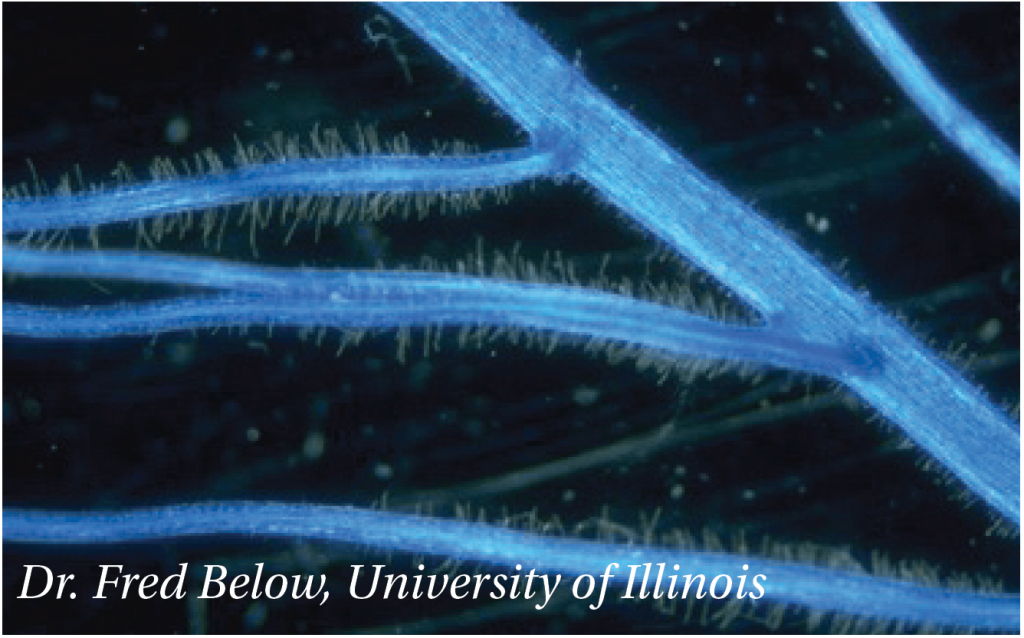
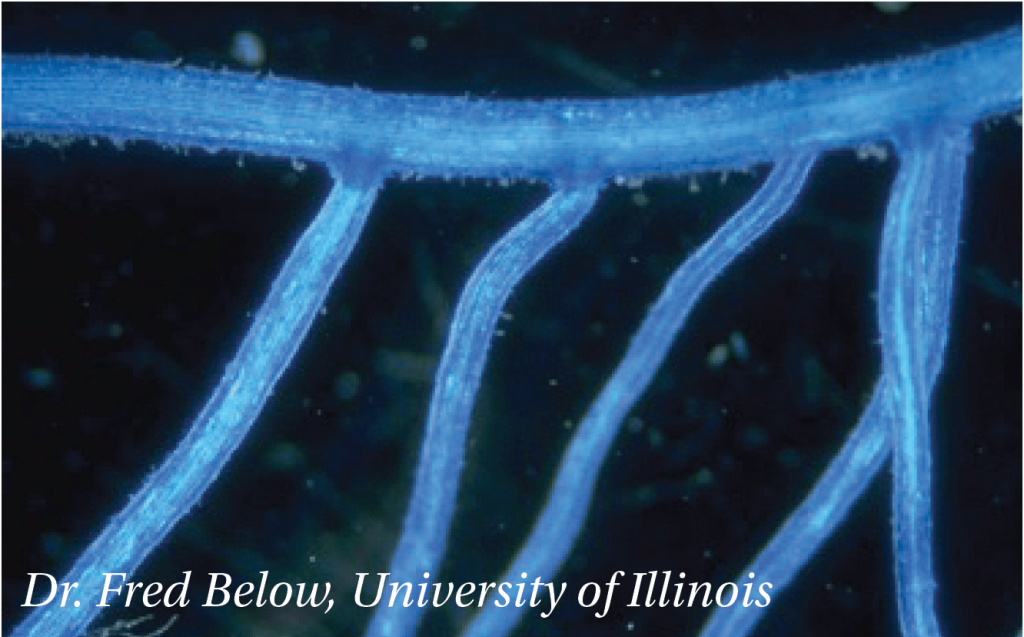
- University of Illinois Study: Demonstrated increases in plant nutrient uptake
- Nitrogen uptake: Increased by 44%
- Potassium uptake: Increased by 50%
Root Hair Visual (Below) Translated To Increased Nutrient Uptake (Wheat)

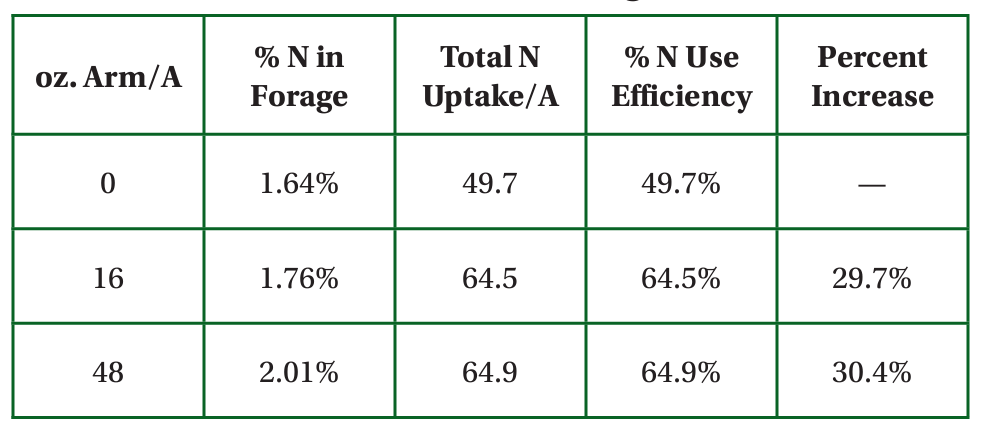
- Texas A&M University Study: Showed significant improvements in bermudagrass nutrient uptake
-
- Nitrogen uptake: Increased by 29.7%
- Potassium uptake: Increased by 36%
Armament on Bermudagrass (N)
Armament on Bermudagrass (K2O)
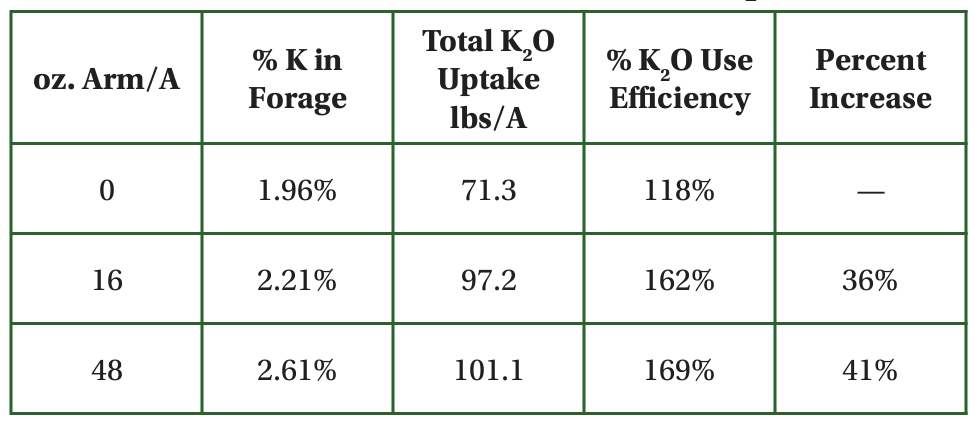
These results highlight Armament’s ability to enhance nutrient use efficiency, leading to healthier plants and more sustainable fertilizer use.
Ready to optimize your nutrient program? Contact your local distributor to learn more about Armament and its role in improving plant nutrition.

Related Posts


Media Contact John Gruneisen

I am the Midwest territory sales manager for EnP, supporting the Foliar-Pak product line. I am a Columbus, Ohio native and I graduated from The Ohio State University with BS in Turfgrass Science and a minor in Plant Pathology. I spent nine years in the golf industry before getting into the vendor sector of the green industry eight years ago and focusing on carbon-based fertility. I am passionate about efficient and effective fertilizer. Send me an email if you’d like to connect.
Read More News Posts from John